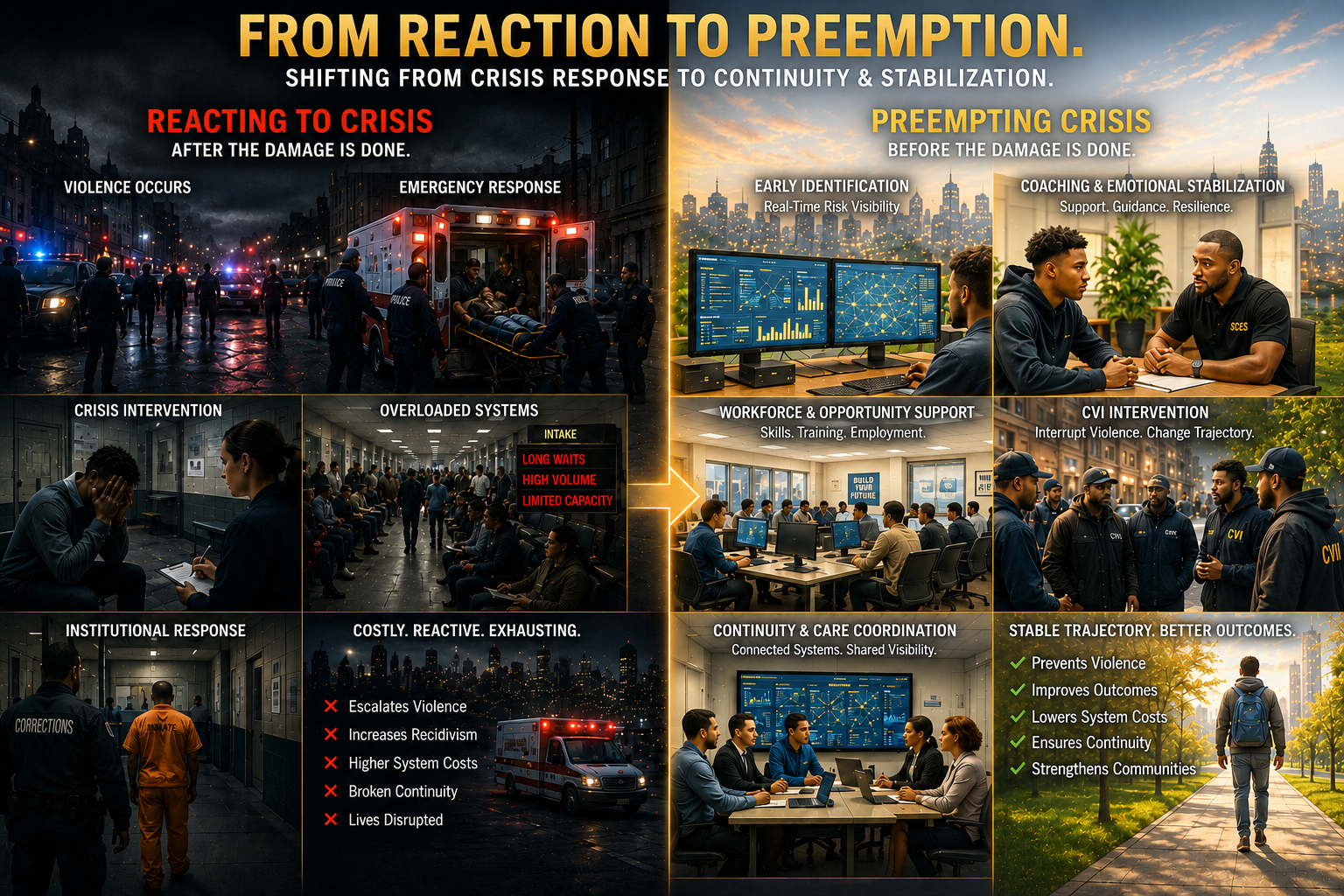
ONE CITY. ONE SYSTEM. ONE STANDARD.
Cities Do Not Fail From Lack Of Effort. They Fail From Lack Of Operating Infrastructure.
city systems function as designed
The Evolution of a Municipal Condition
Public safety and human service systems did not fail by accident. They were built deliberately — agency by agency, mandate by mandate — in response to crime, housing collapse, incarceration, and recurring community crisis. Each institution was designed to govern one problem inside one boundary.
That design made sense when problems were discrete. They no longer are.
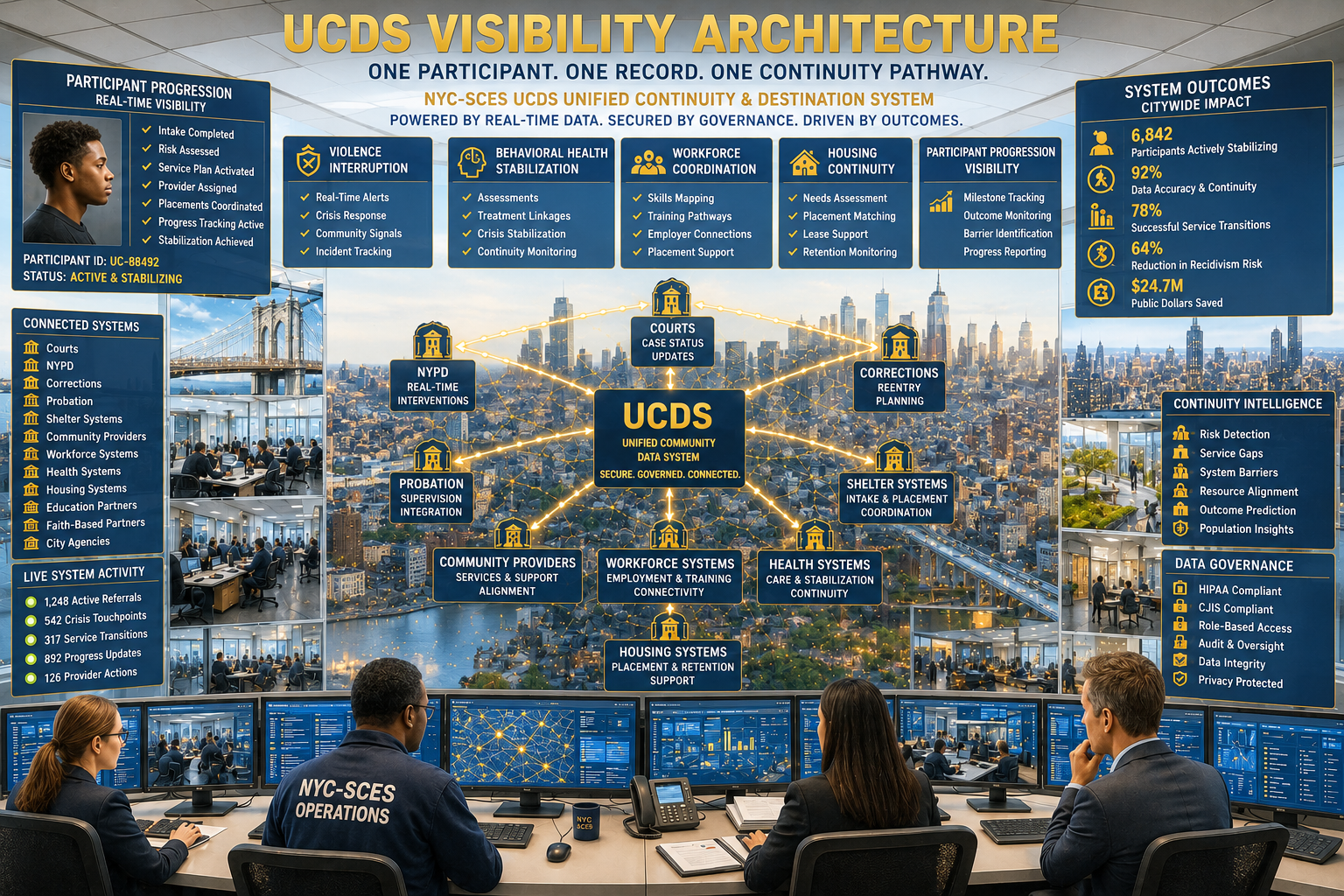
The population generating the highest demand is not experiencing one problem inside one agency. It is experiencing one interconnected instability condition across corrections, shelter, behavioral health, supervision, workforce, and crisis response simultaneously — systems never designed to operate as one, and that still do not.
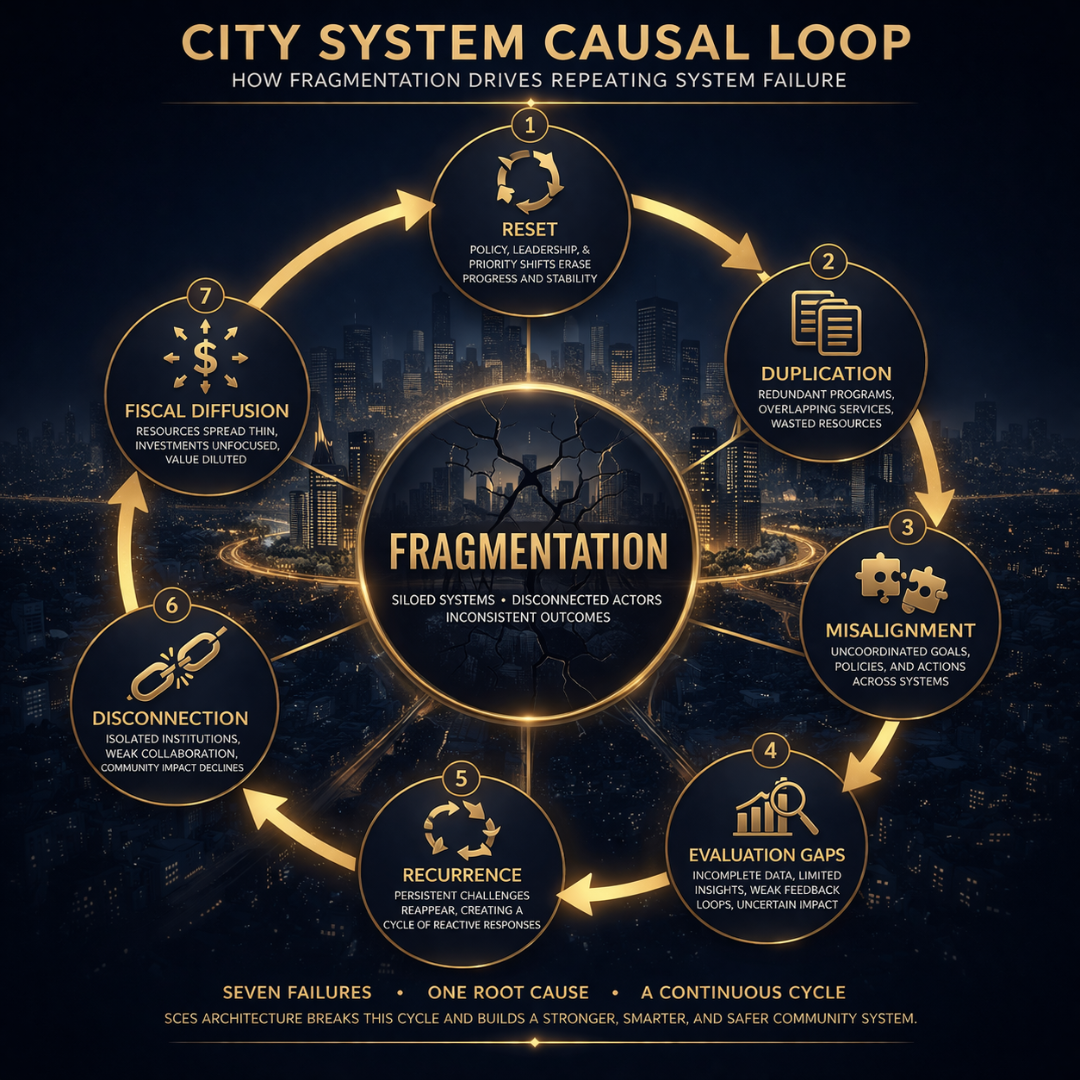
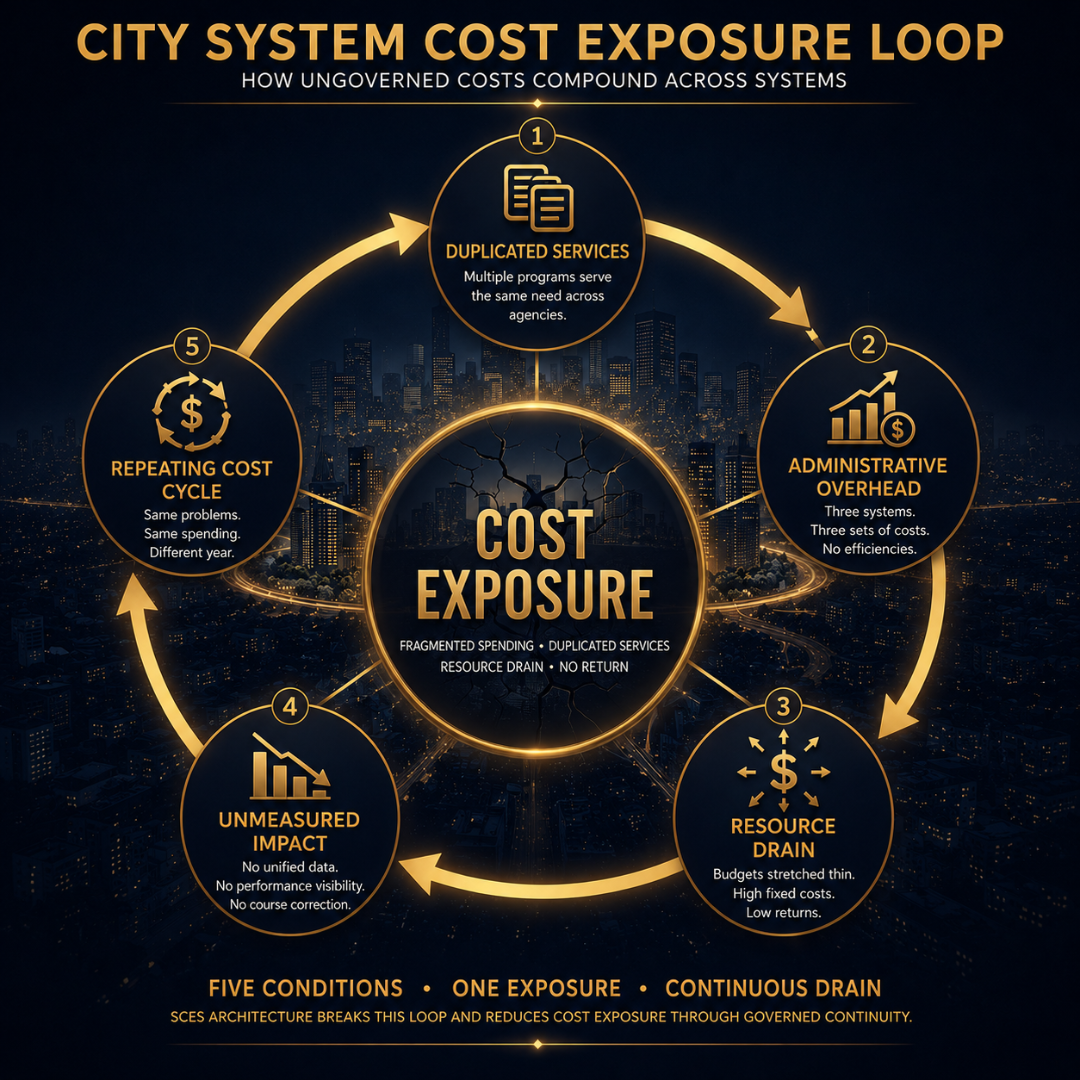
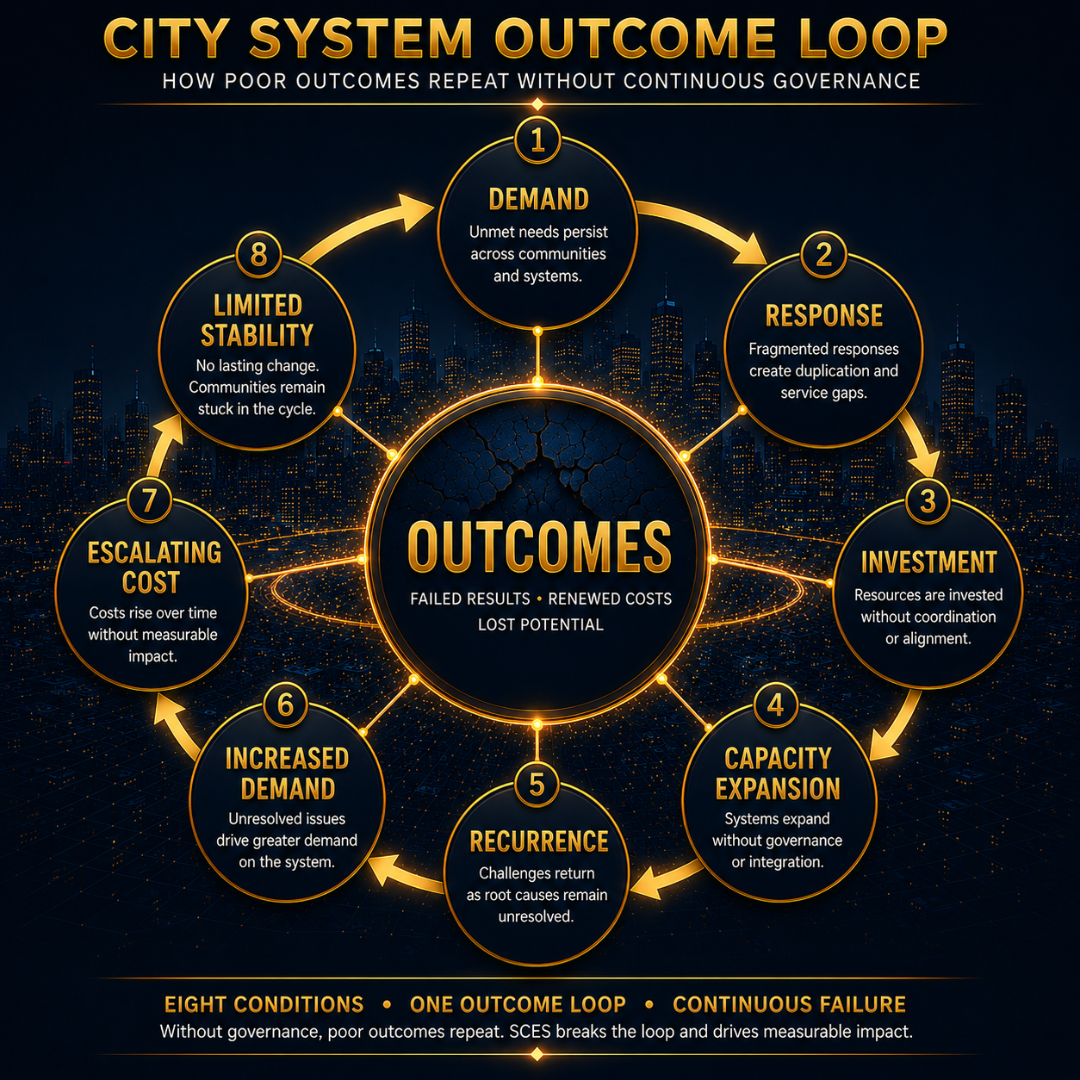
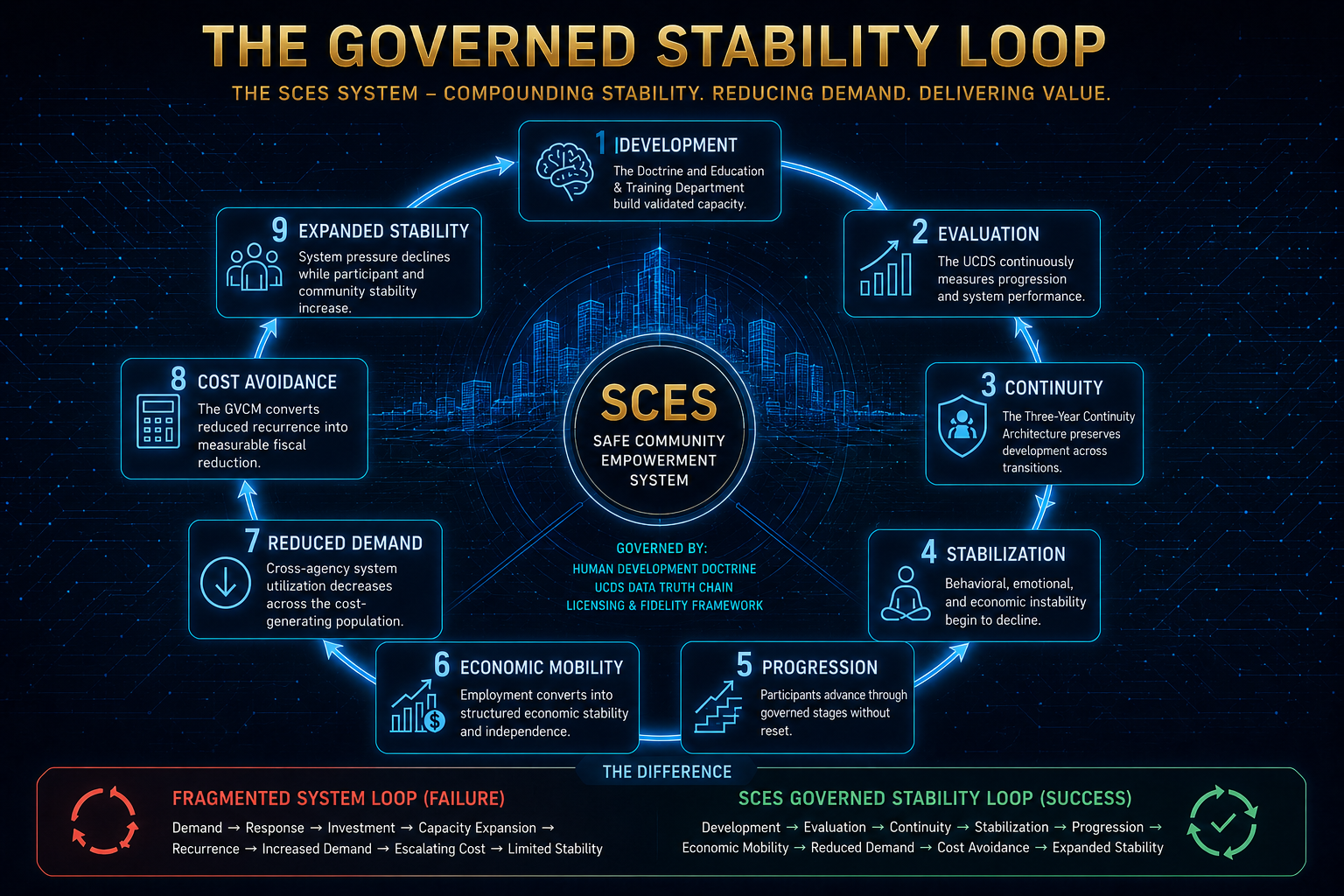
Fragmentation is the result. Weak continuity generates recurring demand. Recurring demand compounds cost exposure. Outcomes remain episodic rather than cumulative.
That is not a reform problem. It is an architectural one.
how the system works
Phase I — Operational Calibration & Continuity Installation
SCES Phase I Installation maps the actual operating condition of a city before a single component is installed.
Every municipal system faces the same test: whether a concentrated population cycles repeatedly through public safety, supervision, shelter, behavioral health, workforce, and crisis response. When recurring utilization concentrates inside a small share of the population, fragmentation exists operationally — regardless of city size, geography, or intervention strategy.
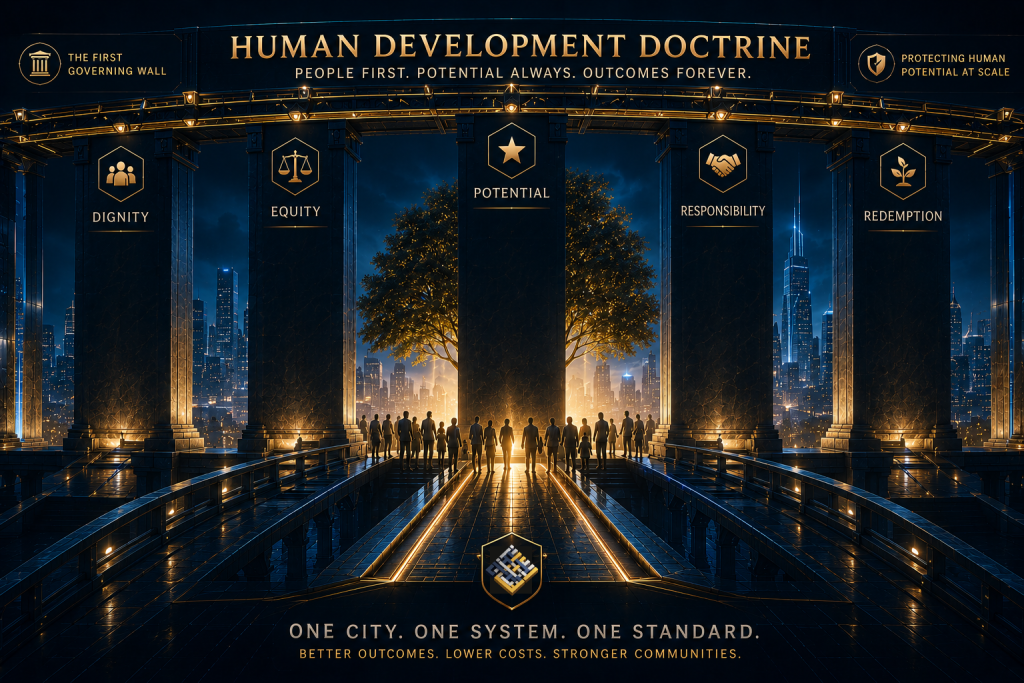

Agency structures, population patterns, provider ecosystems, continuity gaps, and recurring demand pathways are documented against operational reality — not the organizational chart.
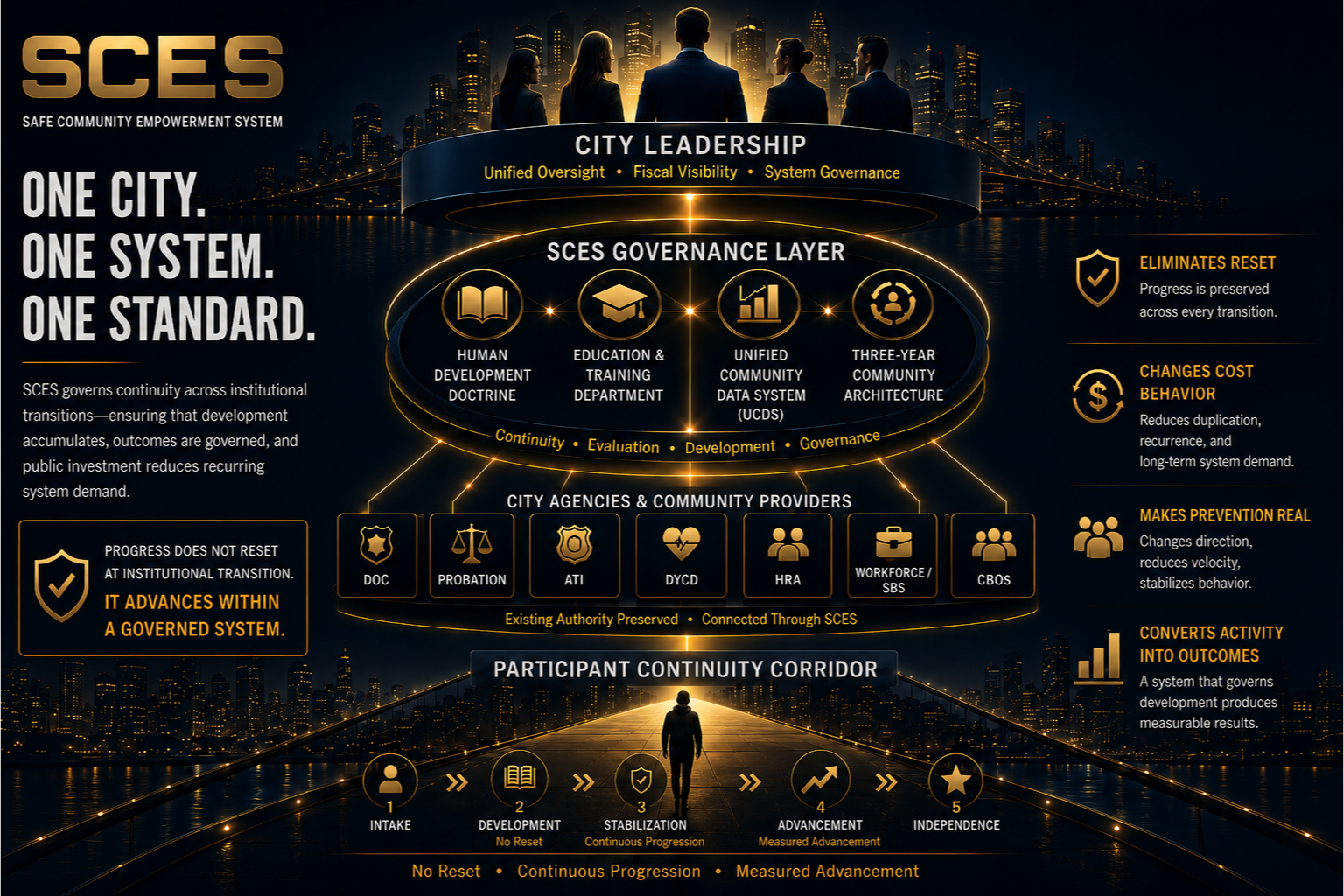
Nothing is displaced. Nothing is disrupted. The governing structure installs across what already exists — so that what already exists begins performing as one system.
WHAT is INSTALLed
six tiers. twenty Components. 151 mechanisms. One operating Architecture.
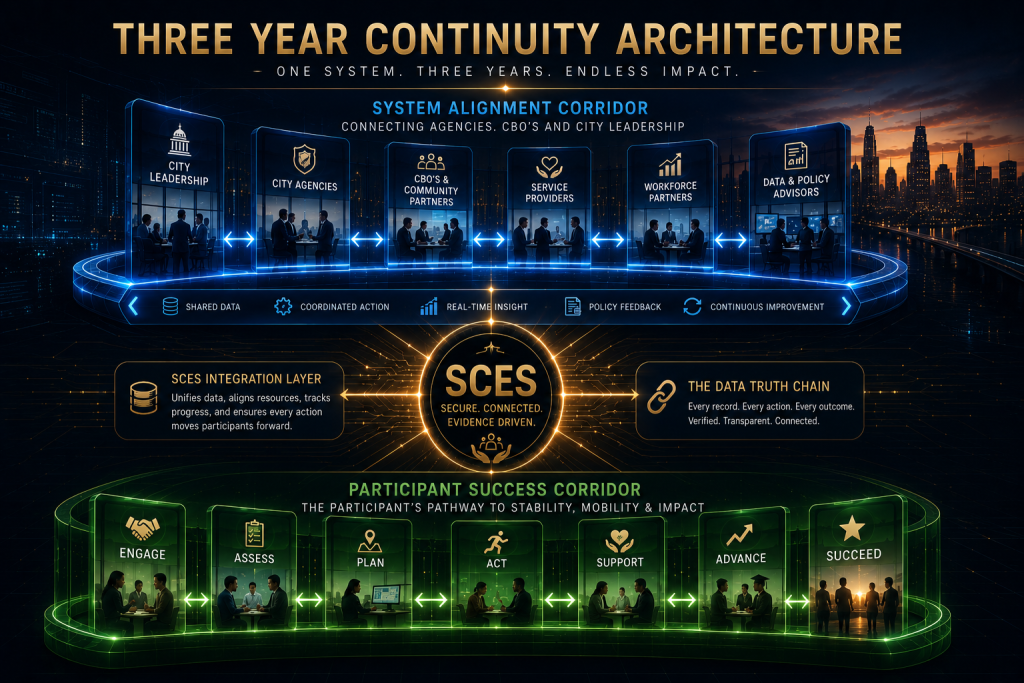
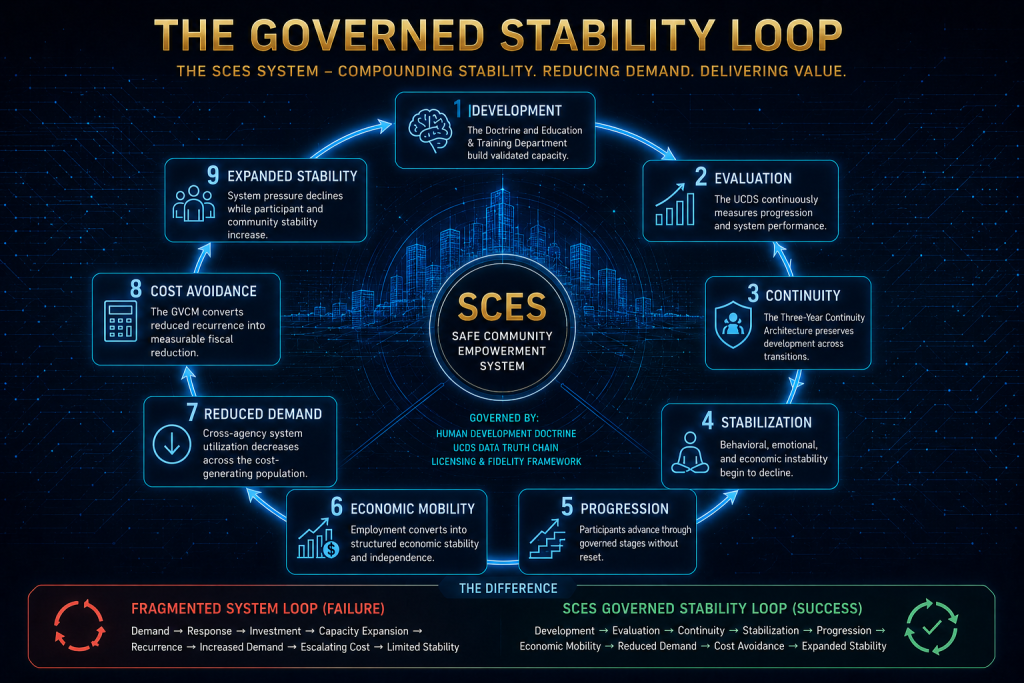
Six Constitutional Tiers
Establish the hierarchy through which SCES authority, standards, Human Development, continuity, evaluation, and accountability are structurally organized.
Twenty Governing Compartments
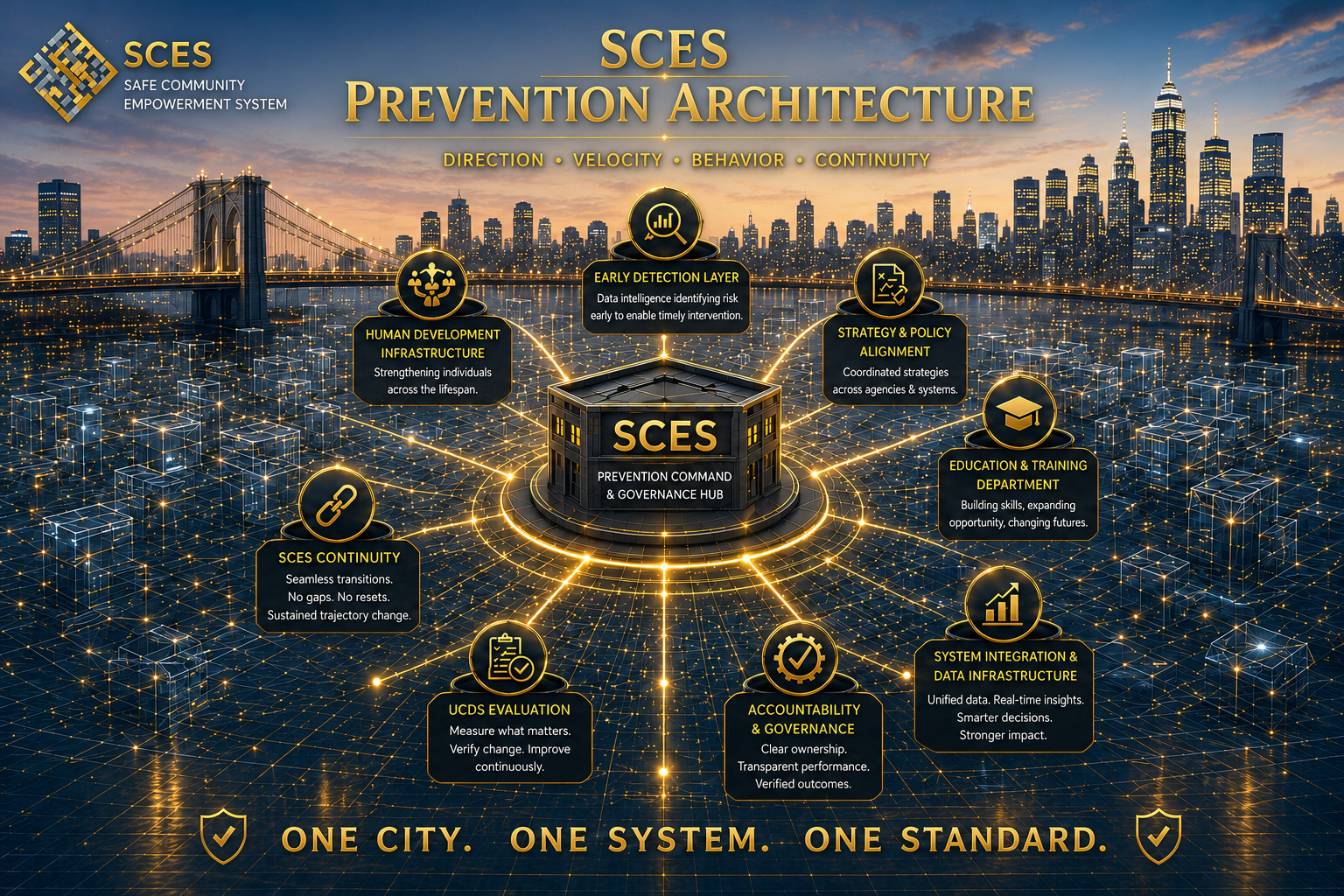
Organize the distinct governing functions required to operate the municipal system as one integrated architecture rather than disconnected institutional activity.
151 Governing Mechanisms
Execute the architecture at the operational level—governing how standards are applied, continuity is preserved, performance is verified, and accountability is maintained.
One Operating Architecture
Integrates all six tiers, twenty compartments, and 151 mechanisms into a single constitutional governance operating infrastructure designed to make institutional performance cumulative and participant development continuous.
ONE CITY. ONE SYSTEM. ONE STANDARD.
Every city already knows who its System Drivers are. What none has installed is the architecture that changes what they become.
Programs govern episodes. SCES governs trajectory.
One City. One System. One Standard.